Deir Al Madinah (Workers’ Village)
Deir Al-Medinah is unique in that it is the lone example of a well-preserved Egyptian village near Luxor. Kings and quee...
 Luxor & Aswan Travel
Travel Guide
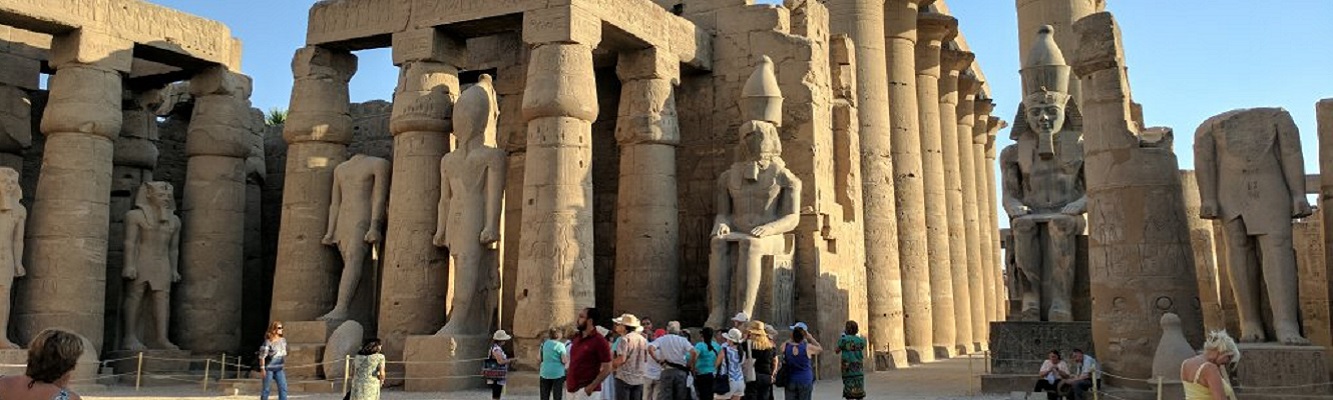
Luxor Temple stands in the center of modern Luxor on the east bank of the Nile. Its entrance, statues and colonnade tell the story of several Egyptian rulers, while the Avenue of Sphinxes links it to Karnak Temple. Here is what to know before you visit.
Luxor Temple is in the city of Luxor, on the site of ancient Thebes. It is about three kilometers south of Karnak Temple. The two temples are separate monuments on the Nile’s east bank, connected by an ancient ceremonial route.
Luxor Temple was built and expanded by several rulers. Its oldest surviving structure dates to Hatshepsut’s reign. Amenhotep III built the temple’s main core and Great Colonnade in the 14th century BC. Tutankhamun and Horemheb completed scenes on the colonnade that depict the Opet Festival.
Ramesses II later added the massive entrance pylon, a courtyard, colossal statues and two obelisks. One obelisk still stands at Luxor Temple; the other is in the Place de la Concorde in Paris.
The temple played a central role in the Opet Festival. During this celebration, sacred images of Amun, Mut and Khonsu traveled from Karnak to Luxor Temple in a procession. The temple’s orientation toward Karnak reflects that ceremonial connection.
Begin at the pylon of Ramesses II, with its colossal statues and surviving obelisk. Beyond it, walk through his courtyard and the Great Colonnade of Amenhotep III, where reliefs illustrate the Opet Festival. Look for the later Roman paintings inside the temple as well: they show how the site changed long after the New Kingdom.
The Avenue of Sphinxes is the processional route between Luxor Temple and Karnak Temple. It extends for about 2.7 kilometers and was reopened after restoration in 2021. Seeing the avenue helps explain how the two temples were connected during the Opet Festival.
Late afternoon lets you see the carvings in daylight and the temple illuminated after sunset. The Egyptian Ministry of Tourism and Antiquities lists visiting hours of 6:00 a.m. to 8:00 p.m. daily. Check its official Luxor Temple listing before you go for the latest hours and ticket prices.
You can visit Luxor Temple and Karnak together on our private East Bank tour. Planning a longer journey through Upper Egypt? Browse our Nile River Cruise options, or contact Luxor and Aswan Travel for help choosing a trip.

Explore the ancient monuments in Luxor where the Pharaonic temples between the two banks of the River Nile our tour is include the Luxor, Karnak temples and temple of Hatsh...

Discovr Marsa Alam Tours through visiting Luxor Temple and Karnak on the east bank and Hatshepsut Temple, Valley of the Kings, Colossi of Memnon on the west bank before hea...

Safaga Shore Excursions Tours: One day tour Safaga to Luxor Visiting the Highlights of luxor West and East Bank that includes a visit to Valley of the Kings, Hatshepsute Te...

Safaga Shore Excursions: Overnight trip to Luxor from Safaga port visiting Luxor Temple, Karnak temples and Valley of the Kings and more. You are going to have a private to...

Safaga Shore Excursions: Private tours from Safaga Port Visiting Cairo and luxor for 2 Days 1 night visiting Giza Pyramids in cairo ,Luxor Temple,Valley of Kings and Coloss...
Discover more fascinating insights and travel guides from our collection

Deir Al-Medinah is unique in that it is the lone example of a well-preserved Egyptian village near Luxor. Kings and quee...

Hatshepsut temple is a reflection of the mortuary temple of Mentuhotep II and was constructed alongside that 11th dynast...

This temple was dedicated to Ramesses II and a testament to his power and influence and it was meant to be the greatest ...

Colossi of Memnon, surviving for 3,400 years and known as an acoustic wonder of the ancient world, is the first monument...

Madinet Habu is situated in Luxor, about 6 km from Valley of the Kings. It was built by king Ramsess III in the 20th dyn...

Situated on the ancient site of Thebes, the Valley of the Kings is the ancient burial ground of many of Egypt's New King...

Located on the east bank of the Nile, Karnak Temple Complex consists of a number of temples. Its name was given as in Ar...

Tombs of the nobles is located near Luxor,Egypt.They are the burial places of some of the powerful courtiers and persons...

Luxor Museum is located in the Egyptian city of Luxor (ancient Thebes). It stands on the corniche, overlooking the River...