At Giza, Egypt has a way of making time feel wonderfully strange. One moment you are looking up at pyramids built thousands of years ago; the next, you are walking into a vast modern museum filled with the objects, ideas, and people behind the monuments. And if you keep following the story south, the Nile takes you to another world of temples, tombs, and riverside sunsets.
Here is how to turn the Grand Egyptian Museum into the beginning of an unforgettable Egypt journey.
Meet the people behind the pyramids
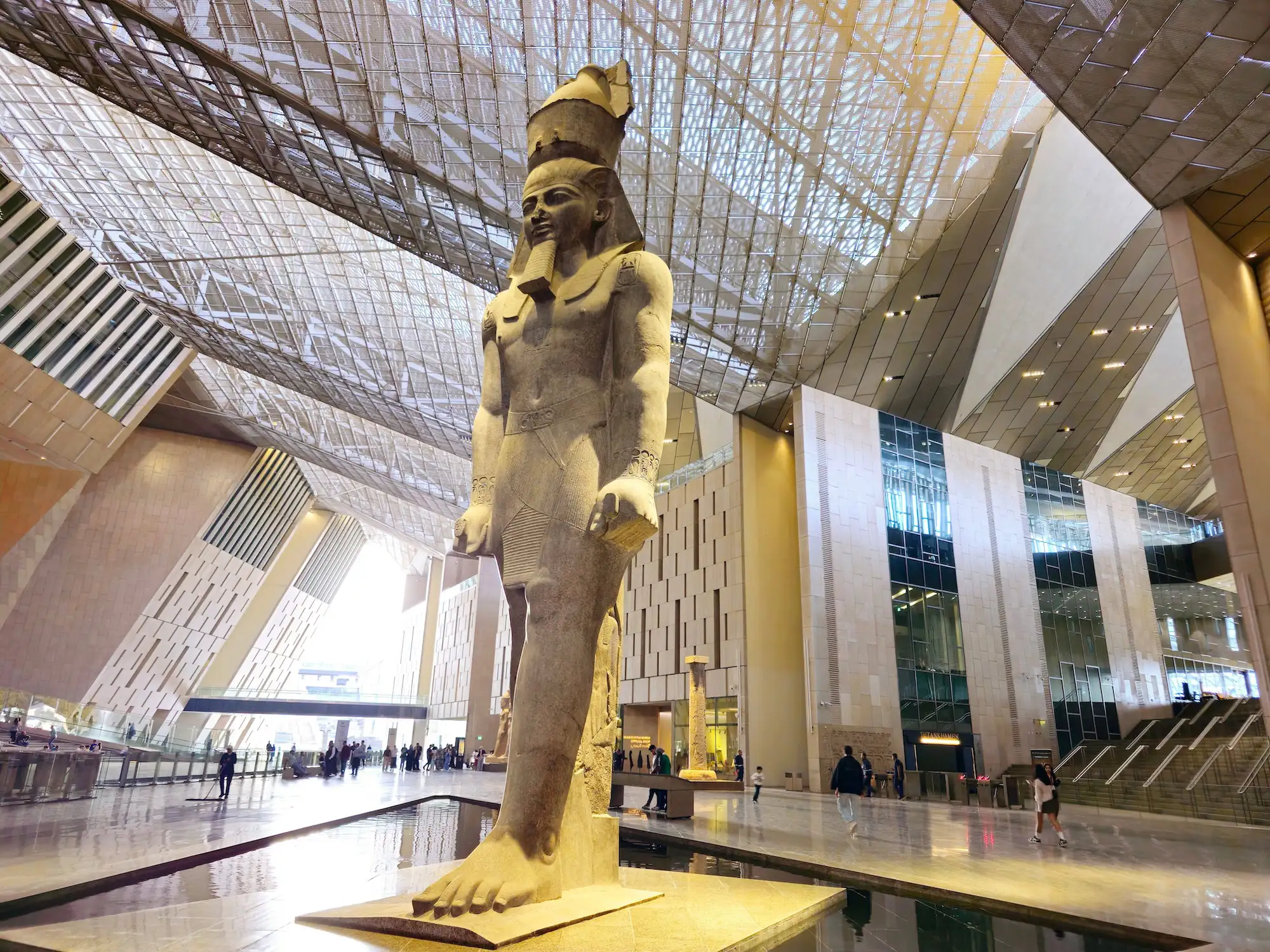
The Grand Egyptian Museum is in Giza, close to the pyramids. Inside its Grand Hall, a colossal statue of Ramesses II makes a memorable first impression. From there, the Grand Stairs and 12 Main Galleries lead you through ancient Egyptian history, with displays exploring kingship, society, and beliefs.
Then comes Tutankhamun. The museum's dedicated galleries bring together more than 5,000 objects from the young king's tomb, displayed together for the first time. The famous golden mask is a highlight, but take time with the smaller things too: a chair, an ornament, or an object made for everyday life can make a distant pharaoh feel unexpectedly human.
The museum also has a separate Khufu's Boats Museum. It is a fascinating bridge between what you see indoors and what awaits outside on the Giza Plateau.

Grand Hall of the Grand Egyptian Museum. Photo: Slyronit / Wikimedia Commons, CC BY-SA 4.0.
Step outside and see Giza for yourself
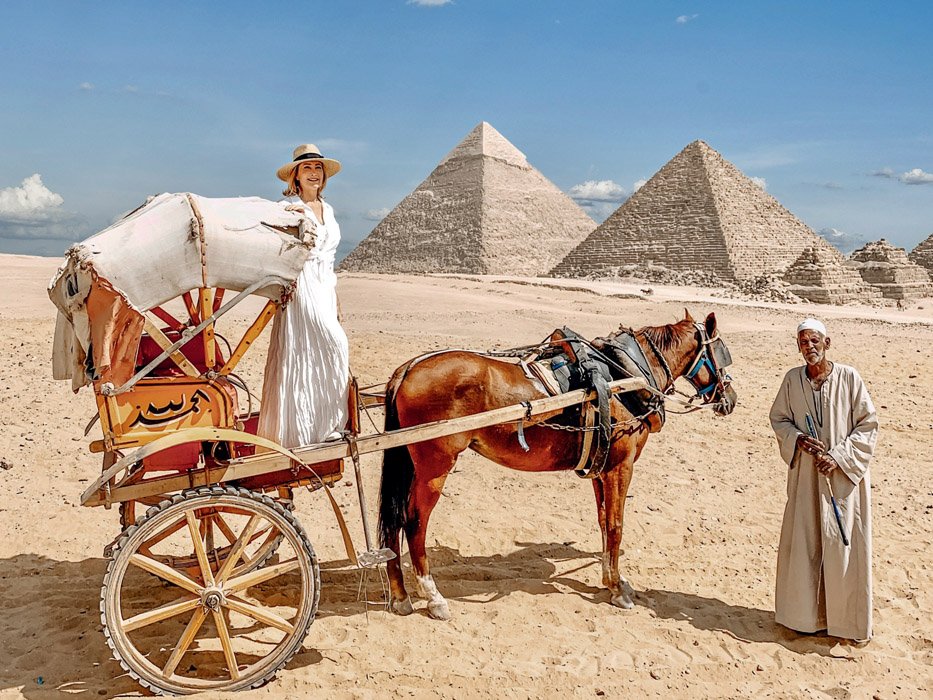
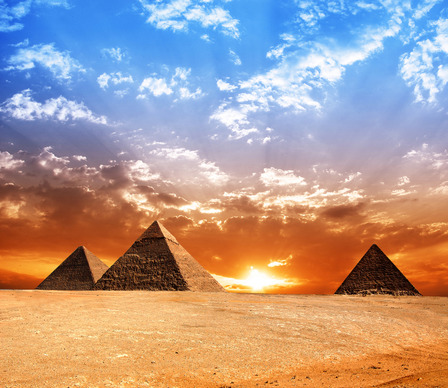
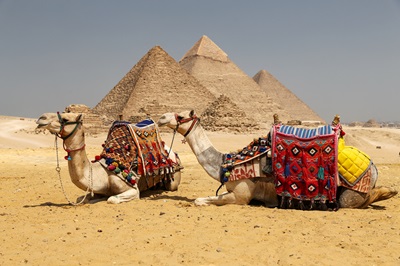
After seeing ancient Egypt through its treasures, go and stand beside its most famous landmarks. The three great pyramids at Giza were built for Khufu, Khafre, and Menkaure. Khufu's Great Pyramid is the last surviving wonder of the ancient world's original Seven Wonders; nearby, the Great Sphinx adds one more unforgettable stop.
Give the Giza Plateau and the museum proper time rather than racing through both. A morning among the pyramids followed by a separate museum visit works well, but travelers who love history may prefer a full day for each. Check the museum's official opening hours and ticketing site when you plan, as arrangements can change.

The three pyramids of Giza. Photo: Benjamin Inbar / Wikimedia Commons, CC BY-SA 4.0.
Follow the story down the Nile
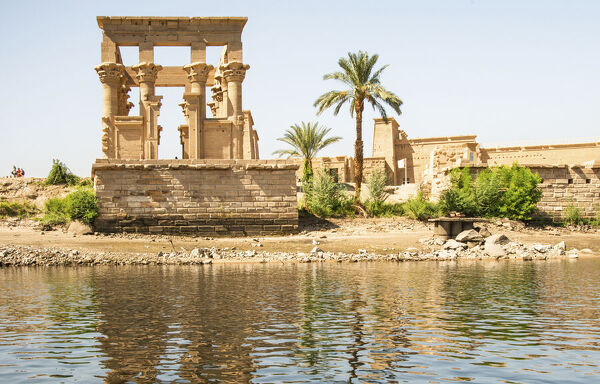
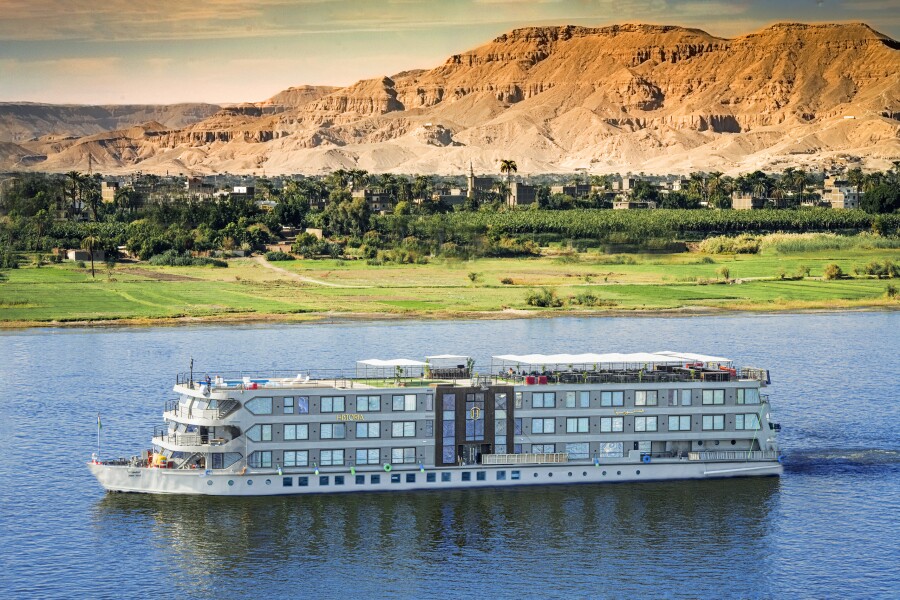
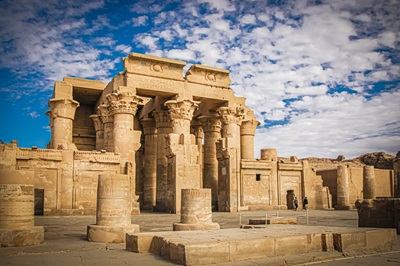
Giza is a brilliant opening chapter, but ancient Egypt does not end there. Continue to Luxor and board a Nile River Cruise toward Aswan. Depending on the itinerary, you might explore Karnak and the Valley of the Kings near Luxor, stop at Edfu and Kom Ombo, and visit Philae in Aswan.
The river gives those visits room to breathe. Between temples, you can watch green fields and palm-lined banks slide past the deck, then arrive at a new chapter the following morning. It is an appealing change of pace after the energy of Giza.
A comfortable way to shape the trip is to allow at least two days for Cairo and Giza, followed by a four- or five-day Luxor–Aswan cruise, with travel time added to suit your flights. Cruise routes and included excursions vary, so choose the journey around the places you most want to see.

The Nile near Aswan. Photo: Marc Ryckaert / Wikimedia Commons, CC BY 3.0.
Make it one trip to remember
Start with the museum's extraordinary objects. Look up at the pyramids that give their stories a setting. Then sail the Nile and discover how much more there is to Egypt beyond Giza.
At Luxor and Aswan Travel, we can shape a journey around the Grand Egyptian Museum, the pyramids, and a cruise between Luxor and Aswan. Contact our team to plan the route around your travel dates.
Popular Articles
What is the best way to see Egypt in 9 days?
15 Aug 2024