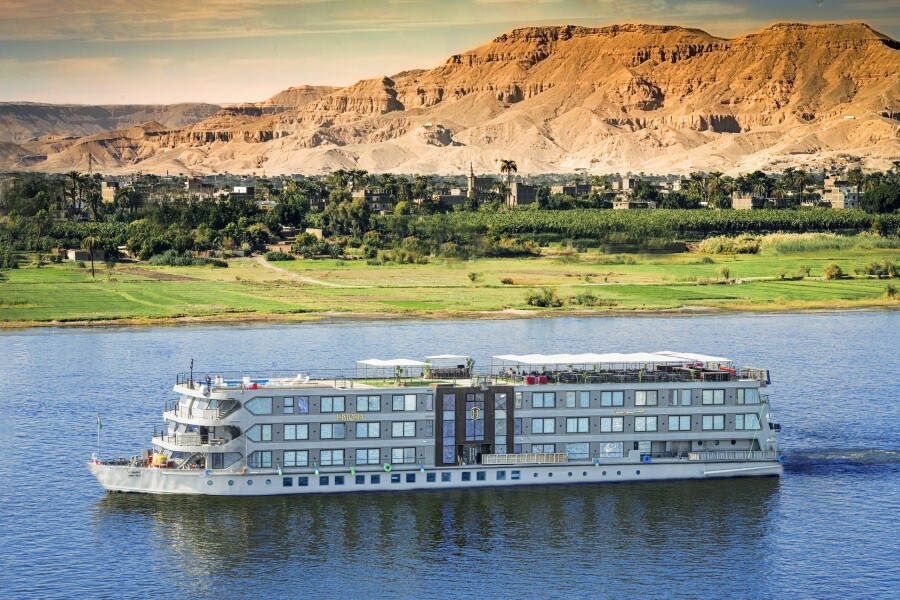
From the temples of Luxor to the Nubian shores of Aswan, a Nile cruise remains one of the most profound journeys in the world. At Luxor & Aswan Travel, we have spent more than a decade guiding travellers along this sacred river — and in this guide, we share everything you need to know before you sail.
Why Cruise the Nile?
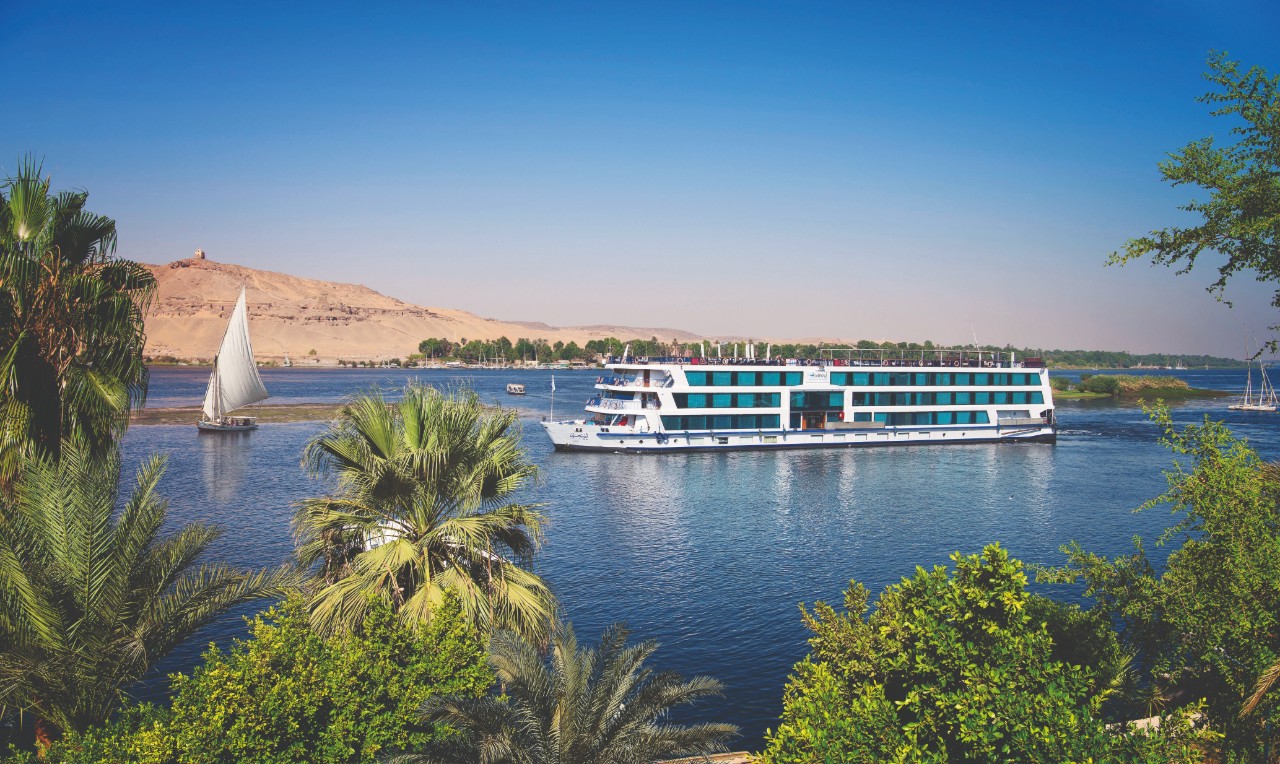
Few journeys rival the magnificence of a Nile River cruise. Gliding along the world's longest river through the heartland of ancient Egypt, you are transported back to a civilisation that flourished for more than three millennia. Unlike any other form of travel in Egypt, a river cruise delivers you to legendary temples and monuments by water — exactly as the pharaohs and merchants of antiquity did. Each bend of the river reveals another treasure: a colonnaded temple rising above the palms, a felucca drifting against a copper sunset, or a Nubian village where time seems barely to have moved.
Choosing Your Vessel
The most important decision you will make is choosing the type of boat. The classic Nile cruise ship — carrying between 60 and 200 passengers across multiple decks — is the most popular choice, offering en-suite cabins, a sun deck with pool, daily excursions, and onboard Egyptologist guides across a range of budgets from three-star to five-star. For a more intimate experience, the traditional dahabiya is the finest way to sail the Nile. Our own dahabiya, Princess Farida, carries fewer than twenty guests in elegantly appointed suites, mooring at quiet villages and stretches of river entirely inaccessible to the larger fleets. For the adventurous traveller on a budget, a felucca — an open-hulled wooden sailing boat — offers one to three nights sleeping under the stars with nothing between you and the river.
The Classic Itinerary: Luxor to Aswan
The standard Nile cruise follows the river between Luxor and Aswan across approximately 220 kilometres, covering the greatest concentration of ancient monuments anywhere on Earth. Most itineraries take four to seven nights, with extended programmes reaching as far south as Abu Simbel.
Luxor is where nearly every cruise begins. The East Bank holds the Karnak Temple Complex — the largest religious complex ever constructed, with a Great Hypostyle Hall of 134 towering columns — and Luxor Temple, which is most magnificent when illuminated at night along the restored Avenue of Sphinxes. The West Bank offers the Valley of the Kings, the mortuary temples of Hatshepsut and Ramesses III, and the iconic Colossi of Memnon.
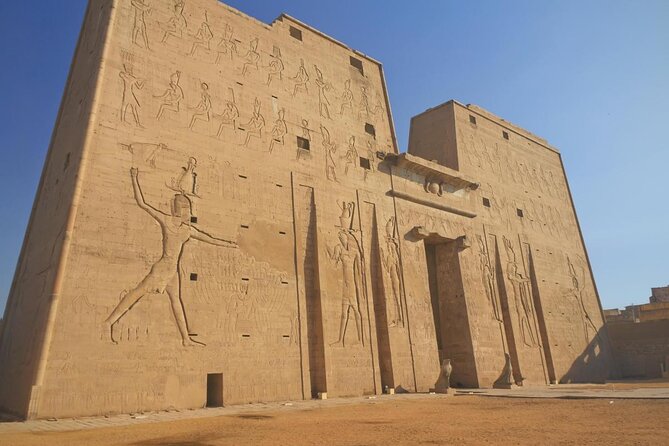
Edfu is home to the Temple of Horus, the best-preserved ancient temple in Egypt. Built over 180 years during the Ptolemaic era and buried under sand for centuries, its original colours and reliefs remain remarkably intact.
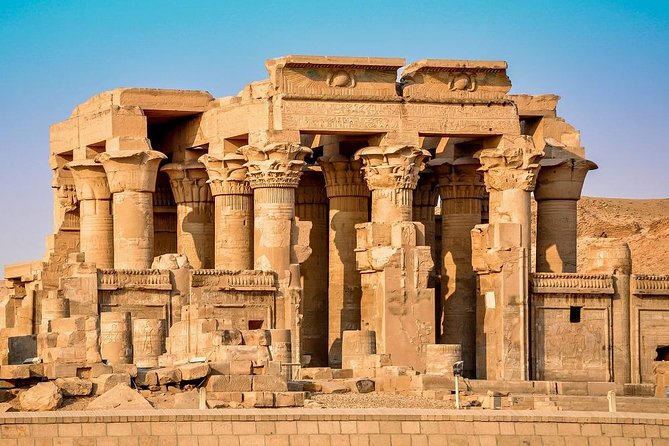
Kom Ombo features a unique double temple dedicated jointly to the crocodile god Sobek and the falcon god Haroeris, perched dramatically on a promontory above the river — best seen at sunset when the sandstone turns golden.
Aswan is the jewel of the Upper Nile, where desert meets river in a landscape of granite boulders, lush islands, and Nubian villages. Key sights include the Philae Temple on its island, the Unfinished Obelisk in the quarries, and the tranquil Elephantine Island. For those who can extend their journey, the twin rock temples of Ramesses II at Abu Simbel — 280 kilometres to the south — are widely considered the single greatest monument in Egypt.
When to Go
The ideal time to cruise the Nile is between October and April, when temperatures are comfortable for touring archaeological sites. November through February is peak season, with daytime temperatures between 20 and 28°C and cool, pleasant evenings — book three to six months in advance for this period. March, April, and October offer excellent conditions with fewer crowds and better prices. Summer months from May to September are extremely hot, often exceeding 40°C, and are best suited to experienced travellers who can start excursions very early in the morning.
Practical Tips for Your Cruise
Bring high-factor sunscreen and a wide-brimmed hat at all times of year — the Egyptian sun is powerful even in winter. Dress modestly for temple visits, with shoulders and knees covered; lightweight linen or cotton works well in all seasons. Carry small-denomination Egyptian Pounds for tips at sites, and drink only bottled water throughout your journey. Good walking shoes are essential, as temple floors are ancient uneven stone. A small torch is invaluable inside the darker chambers of the Valley of the Kings. If you plan to visit Abu Simbel, book your transport in advance, as access is time-restricted and last-minute arrangements in peak season are rarely possible.
Sail with Luxor & Aswan Travel
We are an Egyptian travel company based in Luxor, founded by people who grew up alongside these monuments and have spent their careers sharing them with the world. We offer classic Nile cruise ships across all categories, our boutique dahabiya Princess Farida, and fully tailor-made itineraries built around your interests and schedule. Our guides hold postgraduate degrees in Egyptology, our booking is secure online with international payment options, and our team is with you on the ground throughout your journey. The Nile has been carrying travellers into the heart of Egypt for five thousand years. We would be honoured to carry you next. Visit us at luxorandaswan.com to begin planning your voyage.
Popular Articles
What is the best way to see Egypt in 9 days?
15 Aug 2024
5 Types of Houses You Will Find in Thailand
31 Aug 2023